
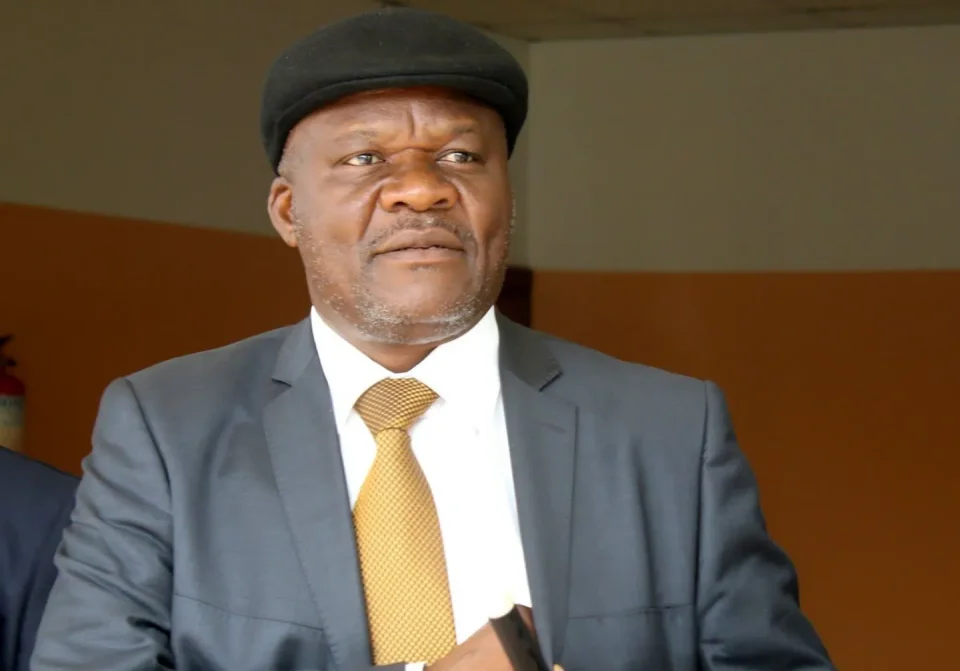
More than two decades after violence tore through eastern Congo, a Paris court on Monday sentenced former rebel leader Roger Lumbala to 30 years in prison, a decision hailed by human rights groups as a rare step toward accountability for crimes long left unanswered.
The Paris criminal court convicted Lumbala of “complicity of crimes against humanity” for abuses committed during the Second Congo War. One of his lawyers criticized the ruling as excessive and confirmed that Lumbala has ten days to lodge an appeal.
Lumbala, now 67, headed the Congolese Rally for National Democracy, an armed group backed by Uganda that operated in eastern Congo in 2002 and 2003. Prosecutors said the movement carried out systematic attacks on civilians, with the Nande and Bambuti ethnic communities particularly affected.
United Nations reports presented to the court detailed a campaign marked by torture, executions, rape, forced labor and sexual slavery carried out by fighters under Lumbala’s command.
Survivors of the violence testified throughout the trial. David Karamay Kasereka, 41, told judges that his father and several neighbors from the Nande community were tortured and killed by Lumbala’s men. He spoke of brutal acts inflicted on people he grew up with.
“I was just a teenager at the time,” Kasereka said. “The consequences still affect me to this day,” he added, describing how the trauma continues to overwhelm him.
Another witness, Pisco Sirikivuya Paluku, 50, recounted how rebels stormed his uncle’s house, seized his possessions and money, and forced him to work under armed guard for weeks. He said he was beaten and compelled to carry out exhausting labor, from building huts to hauling looted goods back to the rebels’ base.
“These atrocities took place over 20 years ago and I had already lost hope, so I am happy that justice was finally served,” Paluku told the AP after the verdict.
Roger Lumbala largely stayed away from the proceedings, maintaining that French courts had no authority to judge him. He appeared only on the opening day of the trial and returned for the verdict, missing most of the victims’ testimony.
The case was made possible by France’s universal jurisdiction law, which allows its courts to prosecute crimes against humanity regardless of where they occurred. Legal specialists say the ruling is historic, representing the first time a Congolese political or military figure has been sentenced by a national court under this principle for mass atrocities.
Analysts note that accountability has been rare for those who led armed groups during the Second Congo War, with some later securing senior roles in government or the military. That history, they say, has contributed to repeated cycles of violence and eroded confidence in state institutions.
Following the war, Lumbala became Congo’s minister of foreign trade from 2003 to 2005 and later served as a lawmaker. In 2011, Congolese authorities issued an arrest warrant accusing him of backing the M23 rebel group, after which he fled to France, where he had lived before the conflict.
“Today the court made one thing unmistakably clear: architects of mass violence will be held to account. Neither time nor political power will shield them,” said Daniele Perissi, head of the Democratic Republic of Congo program at TRIAL International, which represented civil parties in the case.
The court also heard testimony from survivors of sexual violence.
“Their voices were central to the pursuit of accountability for sexual violence crimes, which remain widely under-prosecuted in conflict settings,” said Yasmine Chubin, legal director at the Clooney Foundation for Justice, another organization representing victims.
Phillipe Zeller, one of Lumbala’s lawyers, repeated after the ruling that the sentence was too harsh and again questioned the court’s jurisdiction.
Eastern Congo has been gripped by violence since the 1990s, fueled by competition over valuable minerals and the presence of more than 100 armed groups. The situation worsened again last week when the Rwanda-backed M23 movement seized a strategic city in the region.
The latest offensive came despite a U.S.-brokered peace agreement signed days earlier in Washington by the presidents of Congo and Rwanda.
