
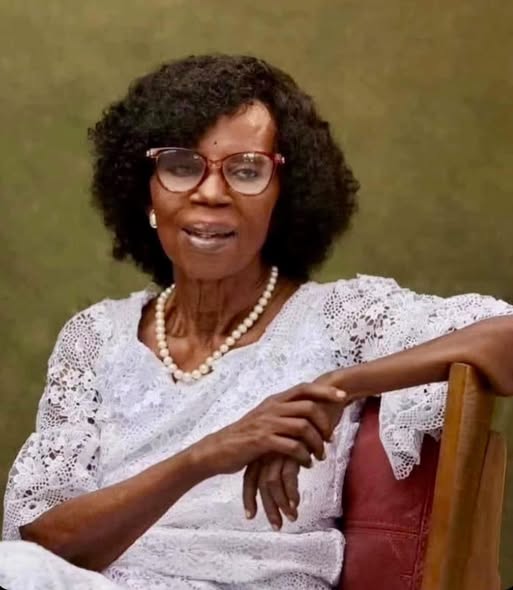
For more than half a century, Grace Nortey commanded attention wherever she appeared, from the theatre stage to Ghanaian television and film. The veteran actress has reportedly died at the University of Ghana Medical Centre (UGMC) in the early hours of Wednesday, August 26, 2026. She was 89.
Born on February 1, 1937, Nortey belonged to a generation of performers whose work helped shape Ghana’s entertainment industry. Her career stretched across theatre, radio, television and cinema, making her a familiar figure to audiences who grew up watching Ghanaian drama at its peak.
Her name became particularly associated with the golden era of Ghanaian television, when programmes such as “Obra,” “Osofo Dadzie,” “Key Soap Concert Party,” “Cantata,” “Taxi Driver,” and “Thursday Theatre” were fixtures in homes across the country.
Nortey rarely played women who simply accepted their circumstances. She built a reputation for portraying outspoken and formidable characters, particularly matriarchs who challenged authority and confronted social problems head-on.
Her roles often placed her at the centre of conflicts involving patriarchal traditions, male dominance, gender-based violence, class discrimination, corruption and social injustice. Her characters could be forceful and uncompromising, but they also carried a sense of familiarity that resonated with audiences.
Some of her most memorable scenes came through confrontations with prominent male actors of her generation, including Solomon Sampa, MacJordan Amartey, George Williams, Kofi Adjorlolo and William Addo, popularly known as Akpatse.
These encounters became part of Nortey’s appeal. She possessed the presence to hold her own against some of the country’s most established actors, turning arguments and tense exchanges into memorable television moments.
But Nortey’s journey to national recognition did not begin on the screen.
During the 1970s, she hosted “Nyeawokoshie,” a radio programme for Ga women on Radio One. The show was designed to empower women and gave Nortey an opportunity to engage with issues affecting women and their communities before television became the principal platform for her public profile.
She had also gained substantial experience in theatre before moving into film and television. Her major screen appearance came in the 1986 Afro Movies comic production “Juju,” co-produced by King Ampaw and Peter Wohlgemuth-Reinery.
In the film, Nortey played the wife of veteran actor Joe Eyison, sharing the production with Emmanuel Agbenowu, Grace Ofoe, Osei Kwabena and Evans Oma Hunter.
That appearance opened the way to a long and varied film career. Her credits include “Lost Hope,” “Dza Gbele,” “Matters of the Heart,” “Sekina,” “Expectations,” “Jewels,” “Beasts of No Nation” (2015), “Ties That Bind” (2011), “Sinking Sands” (2011), “Nana Akoto” (1985), “Escape to Love” (1996) and “The Other Side of The Rich” (1992).
She also appeared in productions associated with the National Film and Television Institute (NAFTI), contributing to an era in which Ghanaian theatre and television were developing a distinct identity and reaching increasingly wider audiences.
Age eventually slowed Nortey’s pace, but it did not completely remove her from the profession she had devoted much of her life to.
Chronic physical health problems and deteriorating eyesight made physically demanding roles increasingly difficult. Reading lengthy scripts also became challenging, limiting the type of productions she could take on.
Even so, she continued appearing in movies and drama productions in smaller roles that required less movement and offered more room for improvisation. It was a quieter phase of her career, but one that reflected her continued attachment to acting.
Nortey also used her experience to speak about the future of the profession. She advocated formal education and academic training for aspiring actors, arguing that performers should develop proper knowledge and skills before making acting a full-time career.
As a member of the Ghana Actors Guild, she was also connected to efforts aimed at improving the welfare of actors, including those who had spent decades building the industry.
Her influence ultimately cannot be measured only by the number of films or television productions in which she appeared. Nortey was part of a generation that helped establish Ghanaian drama as a powerful form of entertainment and social commentary.
She leaves behind five children, including actress Sheila Nortey, who followed her mother’s path into the acting profession.
