
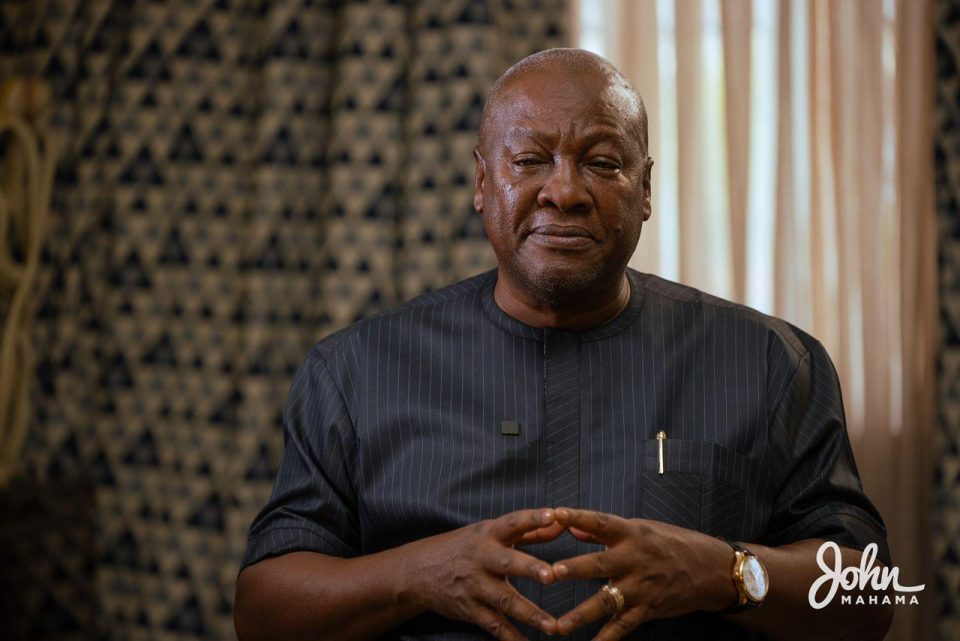
At a public health rollout in Shai Osudoku, President John Dramani Mahama turned attention to a familiar but often ignored habit, late-night eating, warning that it is quietly fuelling a surge in chronic illness across Ghana.
Addressing attendees at the launch of the Free Primary Healthcare Programme at Shai Osudoku District Hospital on April 15, 2026, he pressed for a reset in daily routines, urging people to eat earlier, move more and rethink portion sizes.
He said: “…And so one of the aspects of the free primary health care too will be to educate people on what makes you susceptible to non-communicable diseases, how to change your lifestyle. I mean, if you are the kind of person who likes eating heavy foods, you are not physically active, you are sitting in one place, and yet, when they give you your fufu or Banku, you say it’s too small, you want a big bowl of fufu, and you want to eat it every day. Sometimes you eat it at night before you go and sleep, all those dietary changes you will be educated on”.
He followed with a direct appeal for discipline around evening meals:
“Please, by seven o’clock, eat your dinner and don’t eat again. If you are hungry, just take some cup of tea or something. Don’t eat any heavy food (such as banku) in the evening. You come from work in the evening, and then your poor wife is tired and you come and say do Banku for me, at 10 o’clock in the night, why?”
Linking these habits to broader health trends, the President pointed to the rising toll of non-communicable diseases, describing them as the country’s most significant health challenge. He cited conditions including breast and cervical cancers, hypertension, stroke, cardiovascular disease and kidney failure as increasingly common, driven in part by lifestyle choices.
“With the Free Primary Healthcare Programme, we are trying to prevent, especially, non-communicable diseases before they become something else. The NCDs have become the heaviest disease burden in Ghana,” he said.
At the centre of the new policy, he explained, is prevention through education, equipping citizens with practical knowledge about risk factors and healthier living.
He contrasted today’s routines with those of earlier generations, noting that although similar foods were consumed, higher levels of physical activity, especially manual labour, helped maintain better health outcomes. Sedentary work patterns and reduced exercise, he argued, are now tipping that balance in the wrong direction.
The programme is designed to pivot Ghana’s healthcare model toward early intervention, community-based services and routine screening, rather than relying primarily on treatment after illness develops.
He clarified that the initiative will operate alongside the National Health Insurance Scheme, with basic services such as screenings and treatment for common conditions offered at no cost at Community-based Health Planning and Services compounds.
“The Free Primary Healthcare complements the National Health Insurance and so at that level it is free of charge. You go, the screening, everything is free of charge,” he said.
Cases requiring advanced care will be referred to higher-level facilities, where patients can access services through their NHIS coverage.
To drive the rollout, the government plans to mobilise a mix of health workers and volunteers, including national service personnel and trained nurses awaiting placement.
“We are going to have a category that we will call health volunteers. These will be national service personnel, nurses, and other paramedics who have finished school and are waiting for posting,” he said.
He added that volunteers would be prioritised when formal recruitment and postings are carried out.
The programme is expected to reach 150 districts nationwide, backed by the distribution of about 24,000 medical equipment items to reinforce primary healthcare delivery at the community level.
